
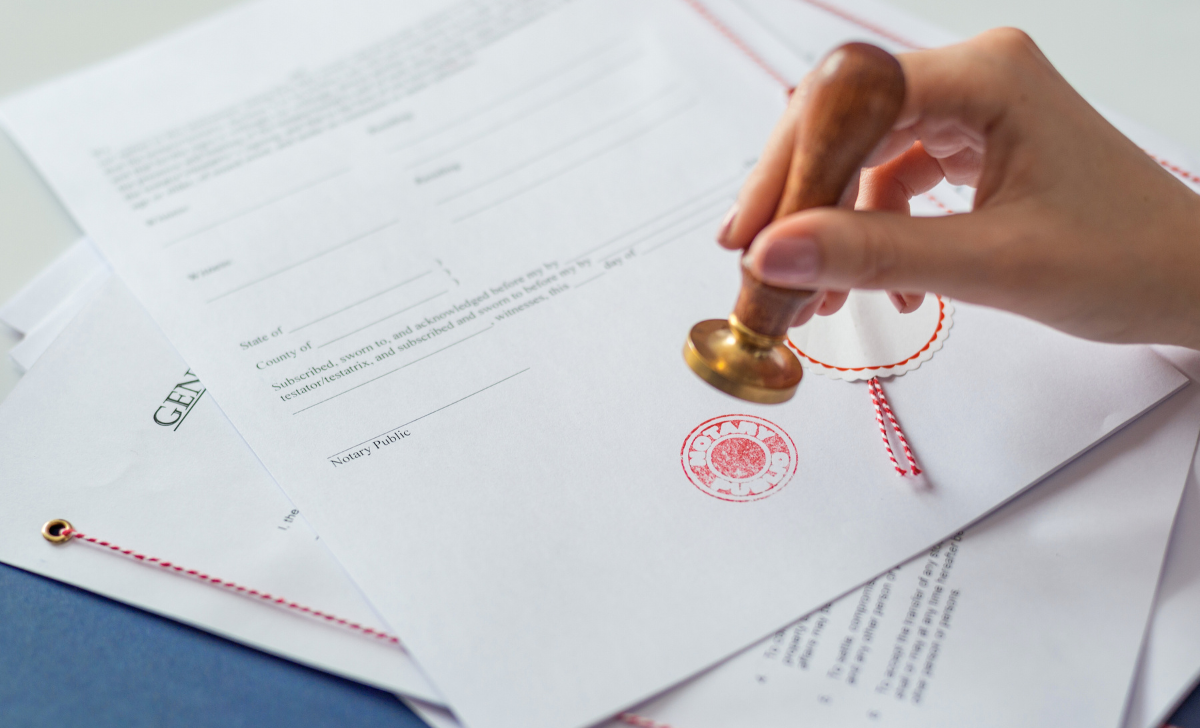
Thailand’s Move Toward the Apostille Convention: Modernizing International Document Legalisation

Thailand is preparing to join the Apostille Convention, a move that is expected to simplify the legalization of international documents and reduce administrative burdens.
Thailand is taking steps toward joining the Hague Convention Abolishing the Requirement of Legalisation for Foreign Public Documents (the Apostille Convention), a development that could simplify the way Thai public documents are recognised abroad. Currently, Thailand is not yet a party to the Apostille Convention, but recent official decisions signal a clear intention to accede, reflecting growing demand from individuals, businesses, and international investors for streamlined cross-border legal processes.
Under the Apostille Convention, which has been adopted by more than 120 countries worldwide, a public document bearing an apostille certificate can be used in any other signatory country without the need for further authentication through consulates or embassies. The Convention is widely regarded as a standard international mechanism for document recognition that replaces multilayer consular authentication with a single certification step. This contrasts with Thailand’s current system, which requires a multi-stage legalisation process involving both a domestic legal certification and consular authentication before documents are accepted abroad.
Although Thailand remains outside the Convention at present, the Ministry of Foreign Affairs (MFA) has announced Cabinet approval for accession procedures in December 2025. The accession process will involve the MFA lodging Thailand’s formal instrument of accession with the depository of the Convention, after which a defined period will elapse before the treaty becomes effective for Thailand. This period ensures that administrative and institutional frameworks are prepared for implementation.
The shift toward the Apostille system has long been discussed in Thailand, where legal practitioners and private sector stakeholders have raised concerns about the complexity, cost, and time required to legalise Thai documents for use abroad. Under the current regime, a typical foreign legalisation process requires a document to be first certified by an authorised Notarial Services Attorney and then authenticated by the Department of Consular Affairs at the MFA. In many cases, the document must also be legalised by the embassy or consulate of the destination country before it can be used for transactions such as company formation abroad, international litigation, educational verification, or immigration procedures.
This dual authentication approach, while legally sound, places a heavier administrative burden on individuals and companies, often involving lengthy appointment scheduling, translation requirements, and payment of multiple fees at different stages. For multinational businesses and service providers dealing with frequent cross-jurisdictional documentation, the absence of an apostille option can lead to delays and added cost, impacting efficiency and competitiveness.
Joining the Apostille Convention is expected to streamline this process significantly. Once effective, authorised government agencies would issue apostille certificates directly on public documents such as corporate filings, powers of attorney, court judgments, and academic credentials. These apostilles would be recognised automatically by all other Convention states, obviating the need for separate embassy legalisation. For foreign investors and international law practices operating in Thailand, this represents a major reduction in procedural barriers, aligning Thailand with international best practice and enhancing legal interoperability.
While there is no fixed date yet for when Thailand’s accession will enter into force, the adoption of the necessary internal processes and the forthcoming deposition of the accession instrument will be key markers of progress. In the interim, businesses and individuals must continue to follow the existing consular legalisation procedures, but the prospect of an apostille regime offers a clear path toward greater efficiency and reduced legal friction in international document usage.
If you have any question regarding Apostille Convention in Thailand. Please feel free to contact us at [email protected]
Andreas Seela
Andreas primarily focuses on corporate/commercial, tax law, and real estate law. He previously worked for an international law firm in Germany and has experience in the Asian legal sphere. He holds a Master’s degree in business law and economics (LLM.oec.) and is currently working on his Ph.D. thesis at Chulalongkorn University in international law.